

DRAIN CAMERA
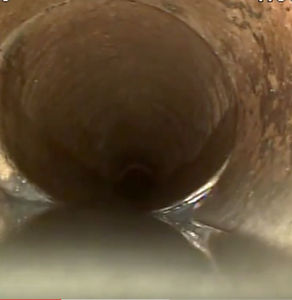
A sewer scope uses a waterproof camera to examine the interior of a home’s sewer line, from the cleanout access point to the municipal connection.

ACCESS POINT
Sewer scope inspections are considered non-invasive, in the sense that no digging or disruption to the home structure is required. A flexible camera is inserted directly into the main sewer line through an existing access point, such as a line cleanout.
SEWER LINES
A sewer scope can detect underground pipe issues like cracks, gaps between connections, tree root intrusions, and corrosion in cast iron or clay.

Although these are potential scenarios; Sewer line defects are seldom beyond repair.

ROOTS
Hydro jetting is one of the most effective ways to remove tree roots from sewer lines. A drain snake breaks up roots also.

GREASE
High-pressure water jetting, enzyme cleaner treatments, and hot water with dish soap flushes out grease.

OFF SET
Sewer pipe offsets (misaligned joints) can be solved with trenchless repairs like pipe lining.

DEBRIS
Minor buildup can often be cleared using a Hydro-Jetter, or a mechanical auger,

CRACKS
Pipe Lining Also known as Cured-In-Place Pipe (CIPP) uses a flexible epoxy-coated sleeve, creating a durable pipe inside an existing damaged one
DIP
A new pipe can be pulled through the old one, breaking up the bellied pipe, often with minimal excavation.

Maintenance on a home's sewer line is often simple. Set strainers to catch hair and debris, no food or grease down the drains, and wipes in the trash.
Modern sewer lines (1970’s and later) are made of plastic piping material. Prior to that, clay and cast iron were used
Today, PVC (Poly Vinyl Chloride) and ABS (Acrylonitrile Butadiene Styrene) are used the most.
The transition in sewer line materials started happening in the 1970s when better technology replaced the older as the standard.
